

How to Find Fresh Licorice Online: A Practical Buying Guide
Last Updated: November 1, 2026
Quick Summary
To find fresh licorice online, check the listing for a production or packing date, a legible best-before date, sealed nitrogen-flushed packaging, climate-controlled storage, and turnover signals like recent reviews and sell-outs. Score each seller on those five points plus a clear replacement policy, and ask directly what production date they would ship.
- Compare price per ounce, not price per listing, since a 16oz bag at $8 is 50 cents an ounce.
- A five-bag bundle at $25 lands at about 31 cents an ounce.
- Ask sellers for the production date, packaging format, storage conditions, and stale-arrival policy before buying.
- Open the box the day it lands and squeeze a piece: it should bend before it snaps.
- Store unopened bags in a cool, dark cupboard and move opened candy into an airtight container.
Table of Contents
- How to Find Fresh Licorice Online: What Freshness Actually Means
- Reading a Product Listing Before You Buy Licorice Candy Online
- Licorice Candy Flavors: Matching the Variety to Your Taste
- Fresh Licorice Root Versus Licorice Candy: Two Different Purchases
- Comparing Freshness Claims Across Sellers
- Shipping, Packaging, and Returns: What to Check Before Checkout
- The Licorice Candy Expiration Date and How to Store Licorice to Stay Fresh
- Stock Your Snack Drawer With Hey Licorice Dude
- Frequently Asked Questions
How to Find Fresh Licorice Online: What Freshness Actually Means
Fresh licorice is candy that still bends before it snaps, smells of anise or fruit rather than the bag, and carries a best-before date far enough out that you have weeks of chewy eating ahead.
Here is the uncomfortable part most buying guides skip. The National Center for Complementary and Integrative Health's guidance on licorice root treats licorice root as a botanical with real safety considerations, while most online shops are selling candy.
Below, we will show you exactly how to read a product listing, judge a seller's freshness claims, and store what arrives so it stays soft. First, the numbers that frame the market.
A Business Research Insights market report estimates the licorice candy market at USD 0.35 billion in 2026, with online platforms taking roughly 20% of sales.
Reading a Product Listing Before You Buy Licorice Candy Online
The listing is your only evidence before money changes hands, so read it like a contract. A good product description tells you the flavor, the form, the pack size, and the ingredients. A thin one tells you a mood.
Ingredients, Allergens, and Dietary Checks
Start with the ingredient panel, not the marketing copy. Look for the actual sweetener, the color source, and any allergen callouts such as wheat, soy, or milk. If a listing shows no ingredient information at all, that is a signal, not an oversight.
Watch out: sellers that bury allergens in a photo of the back of the bag are hoping you will not zoom in. Zoom in.
Pack Sizes, Quantities, and Current Price
Compare price per ounce, not price per listing. A 16oz bag at $8 works out to 50 cents an ounce. A five-bag bundle at $25 lands at about 31 cents an ounce. Check the quantity line twice, because "5pk" and "5 oz" look similar at a glance and mean very different things.
Licorice Candy Flavors: Matching the Variety to Your Taste
Flavor selection is where most buyers overthink and under-sample. If you want the deeper breakdown, our guide to black vs fruit licorice explains what actually separates the two families before you commit.
Black licorice carries that anise-forward, old-fashioned punch that nostalgia seekers want. Fruit flavors pull in the adventurous snackers.
If fruit is your lane, our roundup of fruit flavored licorice snacks worth buying narrows the field fast. Otherwise, start with a pick-and-mix assortment and let your taste buds vote.
Fresh Licorice Root Versus Licorice Candy: Two Different Purchases
These are not the same product, and treating them as interchangeable leads to bad buys. Licorice root and licorice candy are different products.
Check the product form before you check out. If a listing says "root sticks," you are buying botanical, not chewy candy.
The safety angle is real, too. The NCCIH's licorice root overview is worth reading before you consume root regularly, particularly if you take medication or have blood pressure concerns.
Comparing Freshness Claims Across Sellers
Every seller claims freshness. Almost none define it. That gap is where you do your homework, and the fastest way to do it is to turn vague claims into a checklist you can score.
The freshness checklist: five things a listing should tell you
Before you trust a "fresh" badge, look for these five data points. A strong listing shows most of them; a weak one shows none.
- Production or packing date. Not just a best-before date. A best-before date tells you when the candy expires, but a production date tells you how long it has already been sitting.
- Best-before date printed on the package. It should be legible in a product photo or stated in the description. If it is hidden, assume the worst.
- Packaging format. Sealed, nitrogen-flushed bags hold freshness longer than hand-packed boxes or open bins. Hand-packed can be fresher if the seller packs to order, but only if they say so.
- Storage conditions. Does the seller mention a climate-controlled warehouse? Licorice that sits in a hot, humid space hardens before its date.
- Turnover signals. Recent reviews, "new batch" notes, restock dates, and sell-outs all hint at how fast inventory moves. A seller who sells out of a flavor regularly is less likely to ship you a bag from two summers ago.
Questions to ask when the listing is vague
If the listing is thin, contact the seller before you buy. Ask directly:
- "What is the production date on the batch you would ship me?"
- "How is the candy packaged, and is it sealed?"
- "How do you store inventory, and do you ship with insulation in warm months?"
- "What is your policy if the candy arrives hard or stale?"
A seller who cannot or will not answer these is telling you something. A seller who answers with specifics, dates, and a clear replacement policy is giving you evidence, not a slogan.
Score sellers instead of trusting adjectives
Treat claims as claims. Instead, give each seller a simple score: one point per checklist item they satisfy, plus a point for a clear replacement policy. Compare three or four sellers this way and the marketing noise falls away.
One Reddit thread in r/candy reports a customer whose order had not shipped after several weeks with no seller response. That is one person's experience, not a failure rate, but it is a reminder to check recent reviews and shipping policies before you buy.
Before you trust a "fresh" badge, look for these five data points.
| Checklist item | What to look for | Why it matters |
|---|---|---|
| Production or packing date | Stated date, not just best-before | Shows how long candy has already sat |
| Best-before date | Legible in photo or description | Hidden date means assume the worst |
| Packaging format | Sealed, nitrogen-flushed bags | Holds freshness longer than open bins |
| Storage conditions | Climate-controlled warehouse mentioned | Heat and humidity harden licorice early |
| Turnover signals | Recent reviews, new batch notes, sell-outs | Fast inventory means fresher bags |
Shipping, Packaging, and Returns: What to Check Before Checkout
Shipping is where fresh licorice goes to die. Heat softens and then hardens candy, and a bag that sat in a hot truck for four days will taste like it. Understanding why that happens helps you pick a seller who protects the product.
How heat and transit time affect texture
Licorice is a sugar-and-starch candy with a narrow comfort zone. In cool, dry conditions it stays pliable. In heat, the sugars and moisture migrate, the surface can sweat, and pieces fuse together in the bag. Once it cools again, that moisture loss leaves the candy hard and crumbly rather than chewy. Humidity does the opposite damage: it makes the surface tacky and can encourage mold in soft, high-moisture styles. Transit time matters because every extra day in a non-climate-controlled truck or mailbox adds exposure.
What good packaging looks like
- Sealed inner bag. A heat-sealed or nitrogen-flushed bag keeps moisture in and air out. A folded-over bag with a sticker is weaker.
- Rigid outer protection. A box or padded mailer prevents crushing, which cracks hollow licorice and deforms soft pieces.
- Insulation in warm months. Some sellers add a cold pack or insulated liner from late spring through early fall. Ask whether they do, and whether there is an upcharge.
- Ship-from distance. The closer the seller, the shorter the transit. A seller two time zones away is a bigger heat risk than one in your region.
What to check in the delivery and return policy
Before you order, confirm four things:
- Estimated delivery window, not just "ships fast"
- Packaging description: sealed bags, protective boxes, or hand-packed
- Return or replacement policy for damaged or stale arrivals, including the window to report a problem and whether you need photos
- Whether the seller ships in warm months without insulation, and whether you can request it
When the box arrives
Open it the day it lands. Squeeze a piece: it should bend before it snaps. Smell the bag: anise or fruit, not cardboard or stale oil. Check the best-before date against what the listing promised. If the candy is hard, fused, or off-smelling, photograph the packaging and the candy, then contact the seller within their stated window. A seller with a real freshness policy will replace it; one without will stall. That single interaction tells you whether to order again.
The Licorice Candy Expiration Date and How to Store Licorice to Stay Fresh
The licorice candy expiration date is your freshness contract, and it should be printed clearly on the packaging. A best-before date gives you a window, not a guarantee. Candy stored badly goes stale well before that date.
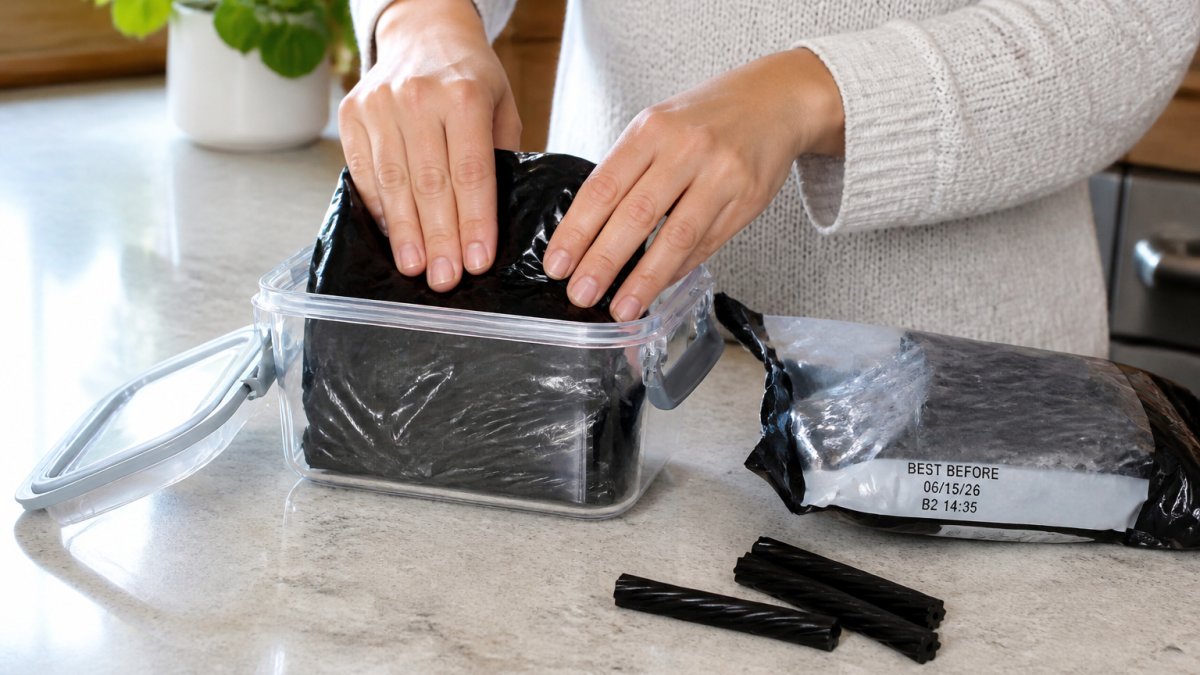
How to Store Licorice to Stay Fresh After Delivery
Unopened bags keep best in a cool, dark cupboard, away from the stove and the sun. Once opened, move the candy into an airtight container, squeeze out the air, and keep it sealed between snacks. Heat and humidity are the enemies; a dry, cool shelf is the fix.
For the full step-by-step, our guide on how to store licorice to stay fresh walks through containers, timelines, and what to do when a bag starts to harden.
Stock Your Snack Drawer With Hey Licorice Dude
Here is where we make our case. We sell licorice in flavors that run from timeless black to blue raspberry, and you can browse and buy online.
Start with the Classic Black Dude at $8 if you want the old-fashioned taste you remember. The Flavor of the Month - 5pk bundles five 16oz bags of one featured flavor for $25, which is the cheapest way to try a flavor at volume.


The Flavor of the Month option is a subscription choice you can read about on our site.
Finding fresh licorice online comes down to reading listings closely, asking sellers the questions they would rather skip, and storing what arrives like it matters.
Frequently Asked Questions
How can you tell if licorice candy is fresh?
Check the best-before date on the product listing and packaging first, then look at how the seller describes production. Check the listing and the best-before date on the packaging before you buy.
Where can you buy fresh licorice online?
Buy from sellers who publish clear product descriptions, pack sizes, and shipping details so you can judge freshness before ordering. Hey Licorice Dude lists flavors like Classic Black Dude, Red Dudes Classic Red, and Strawberry Dude at $8.00 per bag, plus a Flavor of the Month 5-pack for $25.00 that bundles five 16oz bags. Reading the listing carefully and checking the best-before date when the box arrives is the most reliable way to get fresh licorice.
What is the difference between licorice root and licorice candy?
They are not the same product. Licorice root is the plant material, and licorice candy is confectionery. Before buying, read the ingredients list to see what you are getting, and do not assume a candy listing is fresh root or that a root product tastes like the candy you remember.
How should licorice be stored to stay fresh after delivery?
Check the best-before date when your order arrives and note it so you eat the oldest bags first.
