

Black vs Fruit Licorice: What's the Real Difference?
Last Updated: October 24, 2026
Quick Summary
The difference in black vs fruit licorice comes down to flavoring, not always the root. Black licorice usually gets its dark color and bold taste from licorice root extract or anise, while fruit licorice leans on fruity flavorings and bright colors. Many black candies sold in the U.S. contain no licorice root at all.
- Much of the black candy made in the U.S. is flavored with anise extract rather than licorice root.
- Fruit licorice skips glycyrrhizin entirely and relies on fruit flavorings plus colorings.
- Red is the most common fruit licorice color, but fruit flavors also show up in blue, green, and yellow.
- Look for licorice root extract or Glycyrrhiza glabra on the label to confirm real root.
- Black twists tend to chew firmer, while fruit varieties often feel softer and more bread-like.
Table of Contents
- Black vs Fruit Licorice: The Short Answer
- What Black Licorice Actually Is (and What It Isn't)
- What Fruit-Flavored Licorice Really Contains
- The Black Licorice Taste: Anise, Fennel, and a Love-It-or-Hate-It Bite
- Red Licorice Ingredients and the Fruit Flavor Lineup
- Side by Side: Ingredients, Flavor, Color, and Texture
- Reading the Label: How to Spot Licorice Root Extract
- Licorice Gift Ideas for Every Taste
- Frequently Asked Questions
Black vs Fruit Licorice: The Short Answer
The difference in black vs fruit licorice comes down to flavoring, not always the root. Black licorice usually gets its dark color and bold taste from licorice root extract or anise, while fruit licorice leans on fruity flavorings and bright colors.
Here's the part most guides skip. The word "licorice" describes a candy category and a plant, and those two things don't always overlap. The American Heart Association's guidance on black licorice notes that traditional black licorice can affect potassium levels, which tells you real root extract is still out there. Knowing which type you're holding matters.
What Black Licorice Actually Is (and What It Isn't)
Black licorice is a chewy confectionery traditionally flavored with extract from the licorice plant, Glycyrrhiza glabra. That extract carries glycyrrhizin, a compound far sweeter than sugar with a distinct bittersweet finish. The plant's roots have been used in candy and herbal products for centuries.
But here's the twist. Much of the black candy made in the U.S. is flavored with anise extract rather than licorice root, according to Licorice.com's guide to licorice types. Anise delivers a similar aromatic punch, so your taste buds read it as "black licorice" even when the root never shows up. If you want the classic root-forward version, our Classic Black Dude is the traditional black you remember.

What Fruit-Flavored Licorice Really Contains
Fruit-flavored licorice is candy shaped like licorice but flavored with fruit, not root. Think strawberry, cherry, raspberry, and blue raspberry. These varieties skip glycyrrhizin entirely and rely on fruit flavorings plus colorings to build their identity.
The texture is often the same chewy bite you get from a classic twist. What changes is the aroma and taste profile. Fruit licorice reads bright and sweet, with none of the herbal bitterness that divides black licorice fans.
One nuance worth flagging: "fruit licorice" and "red licorice" aren't perfectly interchangeable. Red is the most common color, but fruit flavors also show up in blue, green, and yellow. The flavor, not the color, defines the category.
Common Fruit Flavors and What Goes Into Them
Most fruit licorice sold in the U.S. uses a flour-and-syrup base, then adds flavoring and coloring to create the fruit identity. The flavoring can be natural fruit concentrate, an artificial flavor blend, or a mix of both. The coloring is usually a certified color or a fruit- or vegetable-derived color, depending on the brand.
Here is how the most common flavors typically differ as products:
- Strawberry: The mildest and most familiar. Strawberry licorice usually leans sweet with a soft berry aroma and a red or pink color. It is the flavor most likely to win over someone who says they dislike licorice.
- Cherry: Cherry brings a tart edge and a deeper red color. The flavor is more assertive than strawberry, and the tartness cuts through the sugar base so the candy does not taste flat.
- Raspberry: Raspberry lands between strawberry and cherry. It has a jammy, slightly floral note and often appears in a darker red or magenta piece.
- Blue raspberry: A purely candy-aisle invention rather than a fruit. Blue raspberry is a sweet-tart flavor paired with a bright blue color, and it exists almost entirely in chewy candy rather than in real fruit.
- Green apple and lemon: Less common in twists but common in other chewy shapes. Green apple is tart and crisp-tasting; lemon is bright and acidic. Both rely on the same flour-and-syrup base as red twists.
Why the Ingredient List Matters More Than the Color
A red twist and a blue twist can share nearly identical base ingredients and differ only in flavoring and coloring. That is why reading the back panel is more useful than judging by appearance. If the label lists "strawberry flavor" or "cherry juice concentrate," you know the fruit identity is intentional.
Notice what is absent from a typical fruit licorice ingredient list: licorice root. The fruit lineup is where things get fun, and our fruit-forward picks make the range easy to explore: Red Dudes Classic Red for the old-fashioned red you grew up with, Red Raspberry Dude for a berry-forward chew, and Cherry Dude if you like a little tartness.


The Black Licorice Taste: Anise, Fennel, and a Love-It-or-Hate-It Bite
Few candies split a room like this one. The black licorice taste is herbal, slightly bitter, and deeply aromatic, driven by anise, fennel, or actual licorice root. Fennel brings a gentler, sweeter edge. Anise hits sharper and more pungent.
Taste perception here is partly genetic (Genetic and Environmental Determinants of Bitter Perception and Sweet Preferences). Some people detect these compounds intensely; others barely register them. That explains the "love it or hate it" reputation. If you grew up on old-fashioned black twists, the flavor is pure nostalgia.
What most guides miss is the sweetness underneath. Glycyrrhizin is intensely sweet, so good black licorice balances that sweetness against bitterness and salt. A well-made batch tastes complex, not cloying.
Red Licorice Ingredients and the Fruit Flavor Lineup
Red licorice ingredients typically include wheat flour, corn syrup, sugar, colorings, and fruit flavoring. That flour base is why red twists feel softer and more bread-like than their black cousins. The fruit flavoring does the heavy lifting on taste.
The fruit lineup is where things get fun. Strawberry brings a familiar sweetness. Cherry adds a tart edge. Raspberry lands somewhere in between.
Notice what's absent from that ingredient list: licorice root. Fruit licorice almost never contains it, which is exactly why the two categories taste so different.
Side by Side: Ingredients, Flavor, Color, and Texture
Here's the direct comparison most articles dance around. Black and fruit licorice differ on nearly every axis once you line them up.
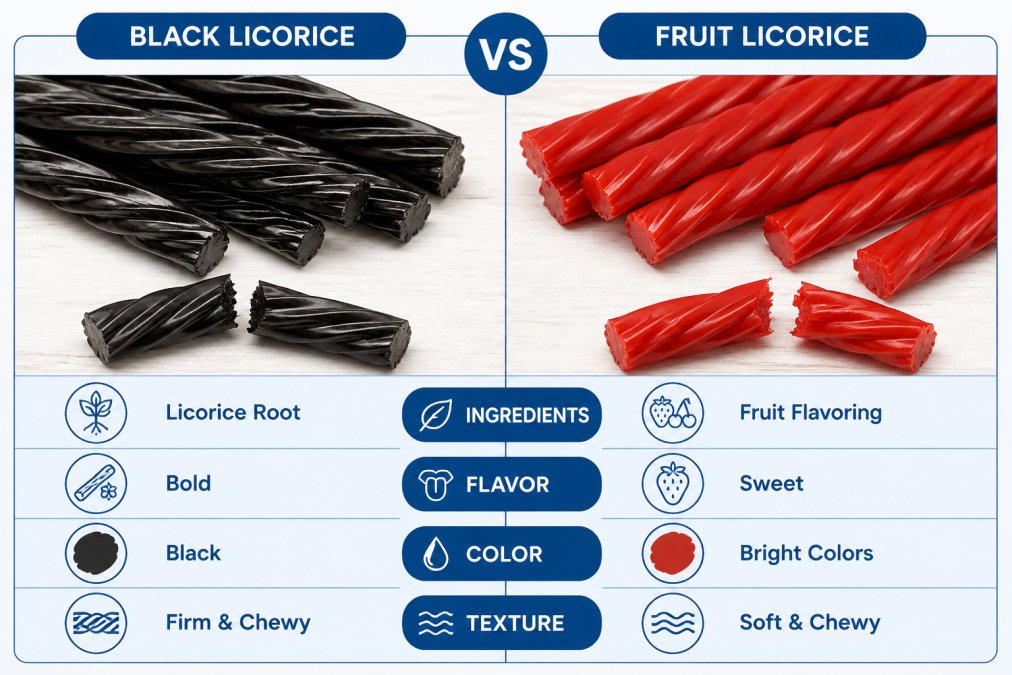
| Feature | Black Licorice | Fruit Licorice |
|---|---|---|
| Primary flavoring | Licorice root extract or anise | Fruit flavorings |
| Key compound | Glycyrrhizin (if root-based) | None from root |
| Color | Black or dark brown | Red, blue, green, yellow |
| Taste profile | Herbal, bittersweet, aromatic | Sweet, bright, fruity |
| Texture | Firm, chewy | Softer, sometimes bread-like |
| Base ingredients | Flour, sugar, syrup, root or anise | Flour, sugar, syrup, fruit flavoring |
| Typical shape | Twists, ropes, bites | Twists, ropes, bites, rings |
Why the Texture Difference Happens
The texture difference surprises people. Black twists tend to chew firmer, while fruit varieties often feel softer. The reason comes down to the base and the flavoring. Both styles usually start with wheat flour, corn syrup, and sugar, but the ratio and the added flavoring change how the dough sets.
Licorice root extract and anise oil are potent, so a black batch needs less flavoring volume to taste bold. That leaves more room for flour and syrup to build a dense, firm chew. Fruit flavorings are milder by nature, so fruit batches often use more flavoring and a slightly softer base to carry the fruit taste.
Shape and Candy-Making Differences
Shape matters too, but both categories share the classic twist and rope forms that define candy-making tradition. The difference is in how the rope is formed and finished. Black licorice is often extruded as a tighter, thinner rope and dried a bit longer, which gives it a firmer snap when you bite through.
A practical way to test this at home: pull a piece apart. A firm black twist resists and then breaks with a clean edge. A softer fruit twist stretches before it tears. Neither is better; they are different products built for different eaters.
Reading the Label: How to Spot Licorice Root Extract
Want certainty? The ingredient list is your only reliable guide. Look for "licorice root extract," "licorice extract," or "Glycyrrhiza glabra" to confirm real root. If you see "anise" or "anise oil" instead, you're getting the flavor without the root.
Here's a quick checklist for your next shopping trip:
- Scan for "licorice extract" or "Glycyrrhiza glabra"
- Note whether "anise" appears as the flavoring
- Check the color: black can mean either root or anise
- Read the flour base to predict texture
- Look for fruit flavoring names on fruit varieties
A common mistake is trusting the front of the package. "Black licorice" on the label describes the style, not the ingredient. The back panel tells the real story.
Licorice Gift Ideas for Every Taste
Buying for someone whose preferences you're unsure about? Build a gift around variety rather than committing to one flavor. A mix of black and fruit lets the recipient discover their favorite without a wasted purchase.
For the traditionalist in your life, a classic black bag is the safe, nostalgic choice. For the adventurous snacker, fruit flavors offer a low-stakes way to explore.
Shipping and checkout stay simple, so a last-minute gift still arrives in time. Browse the full lineup and let the recipient's personality guide the pick.
Choosing between black and fruit licorice gets easier once you know what's actually inside the bag. The real difference isn't color or shape. It's whether licorice root, anise, or fruit flavoring does the work.
Frequently Asked Questions
Is black licorice sweet or salty?
Black licorice lands on the sweet side, but with a bitter, herbal edge that keeps it from tasting like candy-shop sugar. The sweetness comes from sugar or syrup in the recipe, while the bite comes from anise, fennel, or licorice root compounds like glycyrrhizin. Some traditional varieties also carry a faint salty note. That mix of sweet, bitter, and aromatic is why people tend to either love black licorice or avoid it entirely.
What is red licorice made of?
Most red licorice in the U.S. is made from wheat flour, corn syrup, sugar, gelatin or modified starch, and fruit flavoring, with food coloring for the red hue. Licorice root extract is usually absent, which is why red licorice ingredients read more like a fruit candy than a herbal confection. Always check the label if you are avoiding gluten or specific dyes, since recipes vary between brands.
Does black licorice actually taste like licorice root?
Not always. Licorice.com notes that much of the black licorice made in the U.S. is flavored with anise extract rather than licorice root, so the flavor you remember may be anise rather than Glycyrrhiza glabra. True licorice root brings a slightly more bitter, woody undertone. If you want the root-flavored version, look for licorice root extract or Glycyrrhiza glabra on the ingredient list.
Which licorice flavors make a good gift?
A mixed box works best when you are not sure of the recipient's taste. Pair a classic black licorice with fruit-forward options like strawberry, cherry, or raspberry so there is something for every palate. Hey Licorice Dude sells each style for $8.00, which makes building a small sampler easy. If the person is a longtime black licorice fan, a straight black selection is the safer bet.
